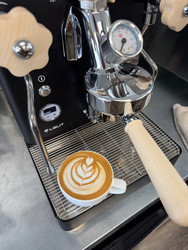
You Love Coffee. But Are You Cut Out to Be Your Own Barista?
Posted by Liz Roquet on 30th May 2026
Let's be honest.
At some point you've stood in a coffee shop, watched a barista make a beautiful cappuccino, and thought:
"That doesn't look that hard."
Maybe you're tired of spending $6 every morning. Maybe the nearest coffee shop is 20 minutes away. Maybe you're still in your pajamas and would rather not put on real pants before coffee.
We get it.
The dream of making café-quality drinks at home is a good one. But before you start shopping for shiny espresso machines and convincing yourself you'll save money, let's figure out which kind of coffee person you are.
Type #1: The "I Want It, But I Don't Want To Learn It" Person
This is the person who loves the idea of making espresso at home.
The reality? Not so much.
If you're not interested in learning a few coffee basics, if you've never willingly read an instruction manual, if your favorite part of a new hobby is buying the gear rather than learning the skill, and if the phrase "let's dial this in" makes you want to leave the room, this might not be your hobby.
Espresso isn't difficult, but it does require learning a few basics, practicing them, and spending a few minutes a week caring for your equipment.
Espresso machines aren't houseplants. They don't thrive when ignored. A great home setup requires a few minutes of cleaning each week. Empty the drip tray. Rinse things out. Backflush the machine when needed.
Nothing difficult.
But if your smoke detector has been chirping for six months because you haven't changed the battery, this might not be for you.
If this sounds exhausting, keep visiting your favorite café. Support your local baristas. Enjoy your coffee. There is absolutely no shame in outsourcing your espresso.
Type #2: The "I Love Great Coffee, But I'm Nervous" Person
You love coffee. You watch videos. You browse espresso machines online.
You think making coffee at home sounds fun, but you're secretly worried you'll spend a bunch of money and have no idea what you're doing.
Good news.
You can absolutely do this.
The biggest mistake people make is trying to learn from 1,000 internet experts at once. Before long you're confused, frustrated, and wondering if espresso requires an engineering degree.
It doesn't. Start simple.
Take a class. Learn the basics from someone who can walk you through the process in person. We teach home barista classes at Lizzy's, but whether you learn from us or somewhere else, learning the fundamentals of espresso extraction, milk steaming, and cleaning will put you on the right path quickly.
Then practice. That's the secret. Not talent. Not fancy accessories. Practice.
Type #3: The Former Café Employee
You already know who you are.
You worked at a great coffee shop in college.
Your Instagram feed is still full of slow-motion latte art pours.
You instinctively watch the barista workflow when you're standing in line.
You know good espresso when you taste it.
You don't need convincing. You just need counter space.
Evict a few mystery cans from the back of the pantry. Move the fruit bowl. Reclaim another eight inches of countertop.
Make room for the coffee bar you've been thinking about for years.
Then invite friends over. Make cappuccinos on Saturday morning. Pull shots after dinner. Make your spouse that perfect cortado.
Become the person everyone mysteriously wants to visit.
You've earned it.
One More Reality Check: Proper Equipment is an Investment
Many entry-level "espresso machines" are really just "strong coffee" machines with disappointing steam power.
If your dream is silky cappuccinos, beautiful latte art, and delicious flavor, you'll need equipment that's capable of producing all this.
That usually means investing in a quality heat exchanger or dual boiler machine with real steaming power.
And whatever you do, don't skimp on the grinder.
We'll say it again for the people in the back: Don't skimp on the grinder.
A great espresso machine paired with a poor grinder is like putting bargain tires on a sports car.
The grinder is responsible for consistency, extraction, and ultimately whether your espresso tastes amazing or disappointing.
The good news?
Quality equipment lasts. Many well-built home espresso machines and grinders can easily serve you for a decade or more with basic maintenance.
Yes, the upfront investment can feel substantial. But if you're making coffee every day, the savings add up surprisingly fast. Many home baristas save around $900 a year per person compared to buying a daily café drink. That's money that can go toward just about anything else while still enjoying great coffee every morning.